
Los Angeles Guide · October 6, 2026
The Best Places to Visit in Los Angeles: Museums, Zoo, Aquarium and Piers
Museums, the zoo, the aquarium and the piers: what each Los Angeles attraction is worth, what changed in 2026, and how to move between them without losing the day to parking.
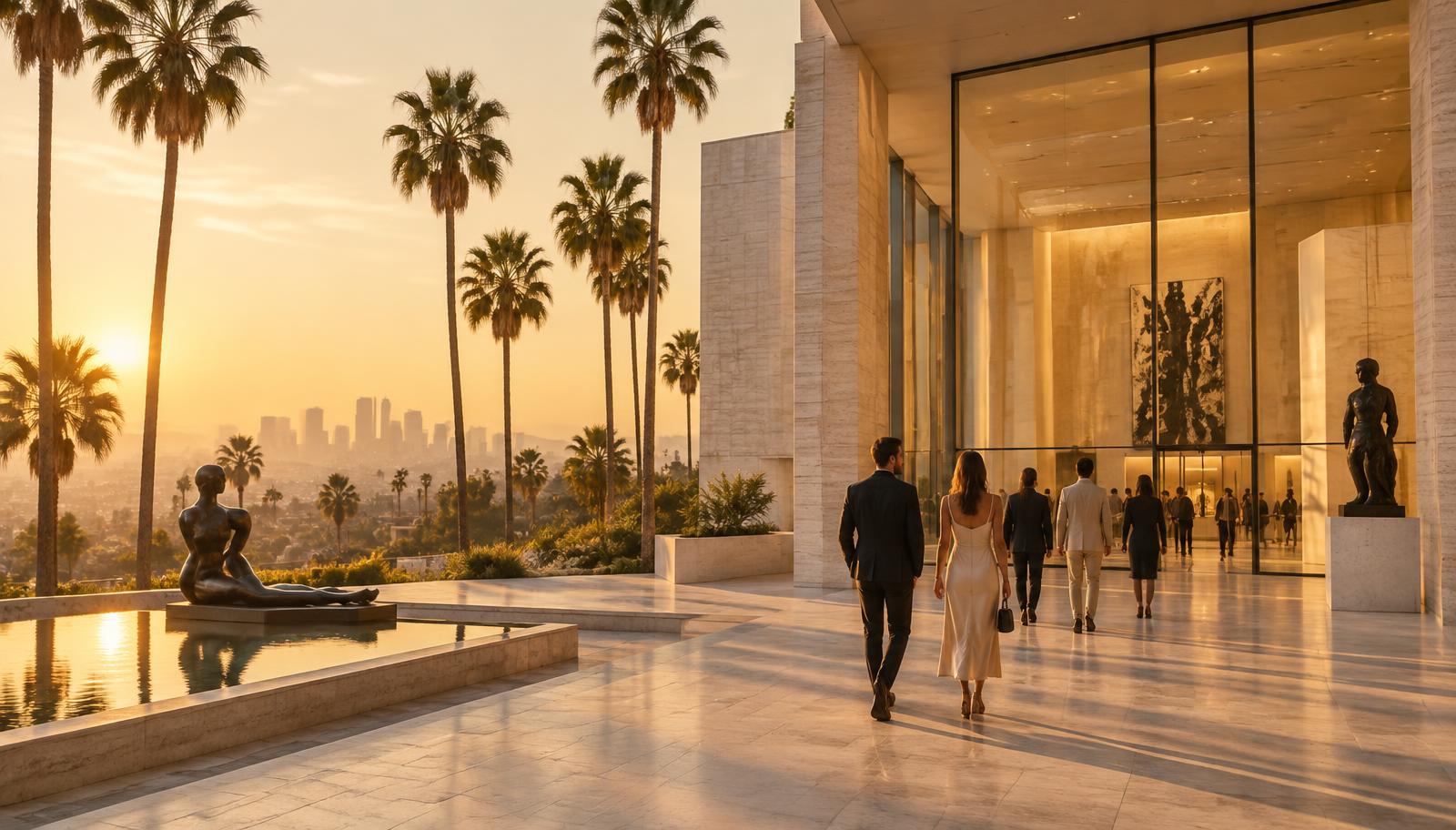
Los Angeles does not have a sightseeing center. The art museums sit along Wilshire and up a hill in Brentwood, the zoo and the observatory are inside Griffith Park, the aquarium is 45 minutes south in Long Beach, and the piers run the length of the coast. Deciding what to see is the easy part — deciding how to move between them is what decides the day.
This guide covers the four categories visitors ask us about most often — museums, the zoo, the aquarium and the piers — with what changed during 2026, what is worth a reservation, and the logistics that no brochure mentions.
Museums: the map changed in 2026
The biggest change is on Museum Row. LACMA's David Geffen Galleries, designed by Peter Zumthor, opened in April 2026 with general admission from May 4: a single elevated concrete-and-glass floor spanning Wilshire Boulevard, about 90 galleries showing 6,000 years of art from around the world, with several acres of shaded public space underneath. LACMA is the largest art museum in the western United States, and this is the most significant building the city has received in a generation — worth planning a morning around even if museums are not usually your thing.
The Getty Center is still the easiest single-museum day: free admission, a tram up to the hilltop campus, European paintings, photographs and design, the central garden, and a view across the basin to Downtown. Parking is paid and the lots fill on weekends, which is the honest reason to arrive by car instead — our Brentwood car service drops you at the tram entrance.
Downtown, The Broad holds a serious contemporary collection with free timed-entry tickets that should be reserved before you travel, and the Academy Museum of Motion Pictures on Museum Row does what its name says — film history, costumes, production art and the Oscars themselves. Both are indoor, air-conditioned and good in the heat of the day.
For something quieter, the Getty Villa in Malibu, the Norton Simon Museum in Pasadena and the Huntington Library, Art Museum and Botanical Gardens in San Marino all reward a drive. They are not walkable from anything else, which is precisely why the lines are shorter.
Exposition Park: the shuttle, the fossils and the museum next door
The attraction of 2026 is at the California Science Center. The Samuel Oschin Air and Space Center opens on November 13, 2026, with Space Shuttle Endeavour standing in vertical launch position — the flown orbiter mated to real solid rocket boosters and the last flight-qualified external tank, in a gallery roughly 20 stories tall. It is the only place in the world where a complete space shuttle system with a flown orbiter is displayed in launch configuration.
General admission at the Science Center remains free and the complex is open daily, but timed reservations are expected for the new gallery and the opening weeks will be busy. The parking structures fill by late morning; a drop-off at the entrance avoids the loop entirely.
One block south is the Natural History Museum of Los Angeles County — dinosaurs, gems and minerals, and the family favorite of the three. Immediately west, the La Brea Tar Pits are in the middle of a two-year campus transformation: the museum closed on July 6, 2026 and is expected to reopen in 2028, so the active excavation, the bubbling tar pits and the mammoth sculptures in Hancock Park are still visible from the street, but the indoor galleries are shut.
Exposition Park sits across from USC and the Los Angeles Memorial Coliseum, and the three institutions are close enough to combine in one half-day. See our Los Angeles city tour, which covers the park and the surrounding neighborhoods.
Griffith Park: the zoo and the observatory
The Los Angeles Zoo and Botanical Gardens sits on a hillside in Griffith Park, and the hill is the part most guides leave out: the entrance is at the bottom, the best exhibits are at the top, and the walk between them is real in the sun. The Rainforest of the Americas is a 2.2-acre Amazon habitat with jaguars, howler monkeys and giant otters; the Campo Gorilla Reserve is a multi-level forested exhibit; the Red Ape Rain Forest holds orangutans on elevated platforms; the Lair covers reptiles and amphibians. Go early on a weekday and it is pleasant; go at noon on a Saturday and it is a queue.
The Griffith Observatory is five minutes down the road and free to enter, with ticketed planetarium shows, telescopes on the lawn and the view that appears in every film about this city. Its parking lot fills early in the afternoon on weekends, street parking around the ridge is restricted, and the roads in and out of Griffith Park slow to a crawl on clear evenings — which is exactly when everyone wants to be there.
The zoo and the observatory share a day well: zoo in the morning while the animals are active, observatory late in the afternoon as the basin lights come on. Doing both by car means one pickup at each door rather than two circling for spaces.
The Aquarium of the Pacific: the Long Beach day
The Aquarium of the Pacific at 100 Aquarium Way in Long Beach is one of the largest aquariums on the West Coast and the one visitors from central Los Angeles most often skip — not because it is weak, but because it is 30 to 45 minutes south and nobody wants to think about the drive back.
Two things are new in 2026. Jelly Dreamscapes runs through April 30, 2027: more than 7,700 gallons of sea jellies across 25 tanks, with dozens of species rotated through and an outdoor touch lab on the harbor terrace. And in September the aquarium opened a HoloTheater — the first on the U.S. West Coast — a holographic theater that needs no glasses or headsets.
The aquarium generally opens around 9:00 a.m. and closes by 4:30 p.m., and it fills with school groups and families on weekdays during term time. Parking is on-site. Plan it as a purposeful half-day rather than a squeeze: the harbor, the Queen Mary and the restaurants on 2nd Street are all within walking distance, and the drive back into Los Angeles is worst between 4:00 and 6:30 p.m. See Long Beach car service.
The piers: Santa Monica to Huntington Beach
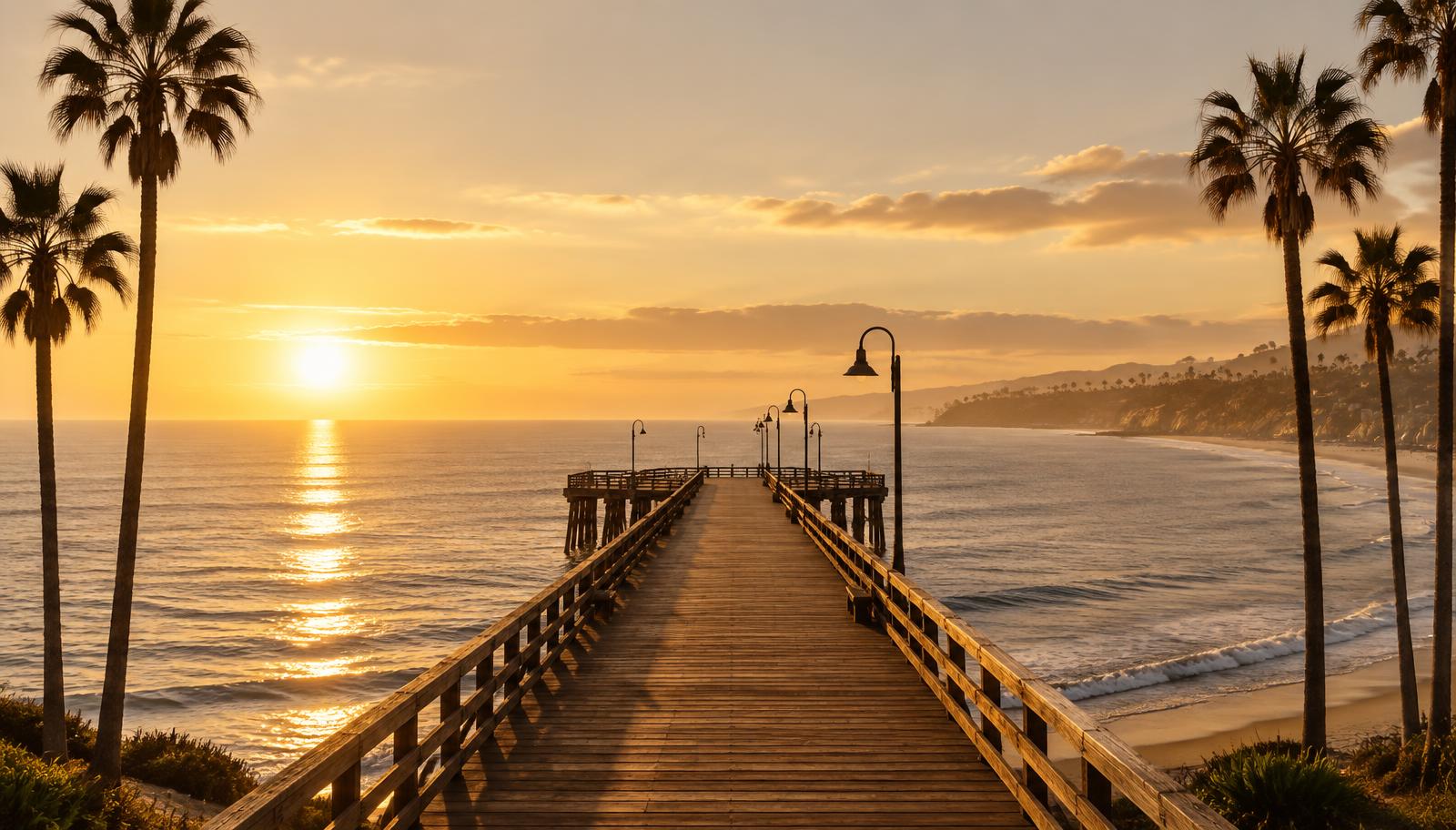
The Santa Monica Pier is the complete version of a Los Angeles pier day. Opened in 1909 and running roughly 1,650 feet into the Pacific, it holds Pacific Park with its solar-powered Ferris wheel, a 1920s Looff carousel with hand-carved wooden horses, a small pier aquarium run by Heal the Bay, restaurants, and the end of Route 66 signage. It is also the busiest pier in the city — late afternoon into sunset is the sweet spot, and the crowds thin quickly once the sun is down.
The Venice Pier, about 1,300 feet long, is the people-watching version: the boardwalk, the street performers, Muscle Beach and the skate park, with Abbot Kinney Boulevard two blocks inland. The City of Los Angeles is carrying out phased structural repairs on the pier itself, so check the current status before planning around it.
South of the airport the piers get calmer and more local. Manhattan Beach Pier is the photogenic one, with a walkable downtown of restaurants running downhill to it. The Hermosa Pier and its Pier Plaza are the casual version — bars, taco spots, volleyball on the sand. Redondo Beach's King Harbor and the horseshoe pier are the family version, with sportfishing boats and harbor-side seafood. And the Huntington Beach Pier, at about 1,850 feet and listed on the National Register of Historic Places, is one of the longest public piers on the West Coast — the surf capital's front porch.
None of these are walkable from each other, and all of them have the same parking problem in summer. Our Santa Monica and Venice tour strings the coastal stops together in one itinerary, and the beaches guide covers what sits between the piers.
Which attraction suits which visitor
Rather than ranking them, match the attraction to who you are traveling with and how much of the day you have.
- First day in Los Angeles, half a day available: Santa Monica Pier in the late afternoon, with the Getty Center or LACMA before it.
- Traveling with children: the zoo in the morning and the Griffith Observatory at sunset, or Exposition Park — Science Center plus Natural History — in one visit.
- A dedicated aquarium day: Aquarium of the Pacific, ideally a weekday morning, combined with the Long Beach harbor.
- Art first: LACMA's new David Geffen Galleries, The Broad downtown, and the Getty Center to finish.
- Avoiding crowds entirely: the Getty Villa in Malibu, the Norton Simon in Pasadena, or the Huntington in San Marino.
- Photography: Huntington Beach Pier at sunset, or the observatory terrace after dark.
Timing, tickets and getting there
Three things decide most Los Angeles sightseeing days. Reservations: the museums with free or discounted admission — The Broad, the California Science Center, the observatory's planetarium — work on timed tickets, and the popular slots go before you arrive. Parking: zoo, museum and pier lots fill by mid-morning in season, and the lots that do not fill are the ones a long walk away. Distance: Exposition Park to Santa Monica is 30 minutes without traffic and 75 with it, and Long Beach adds another 45 either way.
For a day with two or three attractions on it, hourly chauffeur service is the format that works: the car waits with your bags, each stop is a door drop-off rather than a parking search, and the routing can follow the traffic instead of the shortest line on a map. It pairs naturally with a hotel pickup or an LAX arrival, and our service areas page shows which neighborhoods we cover.
If you are deciding between a car and public transport, the Metro guide is honest about where the train wins, and the freeway rush hour guide tells you which hours to avoid on the way back. Then reserve your day — and if your visit falls around a concert, convention or opening night, our events page lists what is happening while you are here.
Keep reading
Passenger Safety
Before You Book a Limo in Los Angeles: How to Check If a Company Is Licensed and Insured
Travel Resources
Los Angeles Traffic, Emergency Numbers & Useful Resources: A Traveler's Guide
Los Angeles Guide
Los Angeles After Dark: A Chauffeur's Guide to Nightlife, Dining & Getting Around
Los Angeles Guide
The Best Beaches in Los Angeles: A Local Transportation Guide
Chauffeur Standards
What Is a Black Tie Chauffeur Service? The Exodus Limo Service Standard
Traveler Guides
Questions to Ask Before Booking a Chauffeur in Los Angeles: A Passenger's Checklist
Airport Guides
LAX Pickup Guide: Curbside Columns, Letters and Numbers Explained
Travel Planning
Best Times to Fly Out of LAX, Burbank, John Wayne and Long Beach
Los Angeles
Los Angeles Freeway Rush Hour: When Each Corridor Actually Moves
Events
LA28 Olympic Games: How to Move Around Los Angeles in Summer 2028
City Guides
The Los Angeles Metro, Explained — and When a Car Still Wins
Los Angeles Guide
Los Angeles Is an Events City: Getting Around Concerts, Conventions and Big Dates
Reserve your chauffeur
Confirmed reservations, transparent pricing and 24/7 dispatch.