
City Guides · August 25, 2026
The Los Angeles Metro, Explained — and When a Car Still Wins
Los Angeles does have a rail system, and it is better than its reputation. Here is what it covers, where it connects and where it leaves gaps.
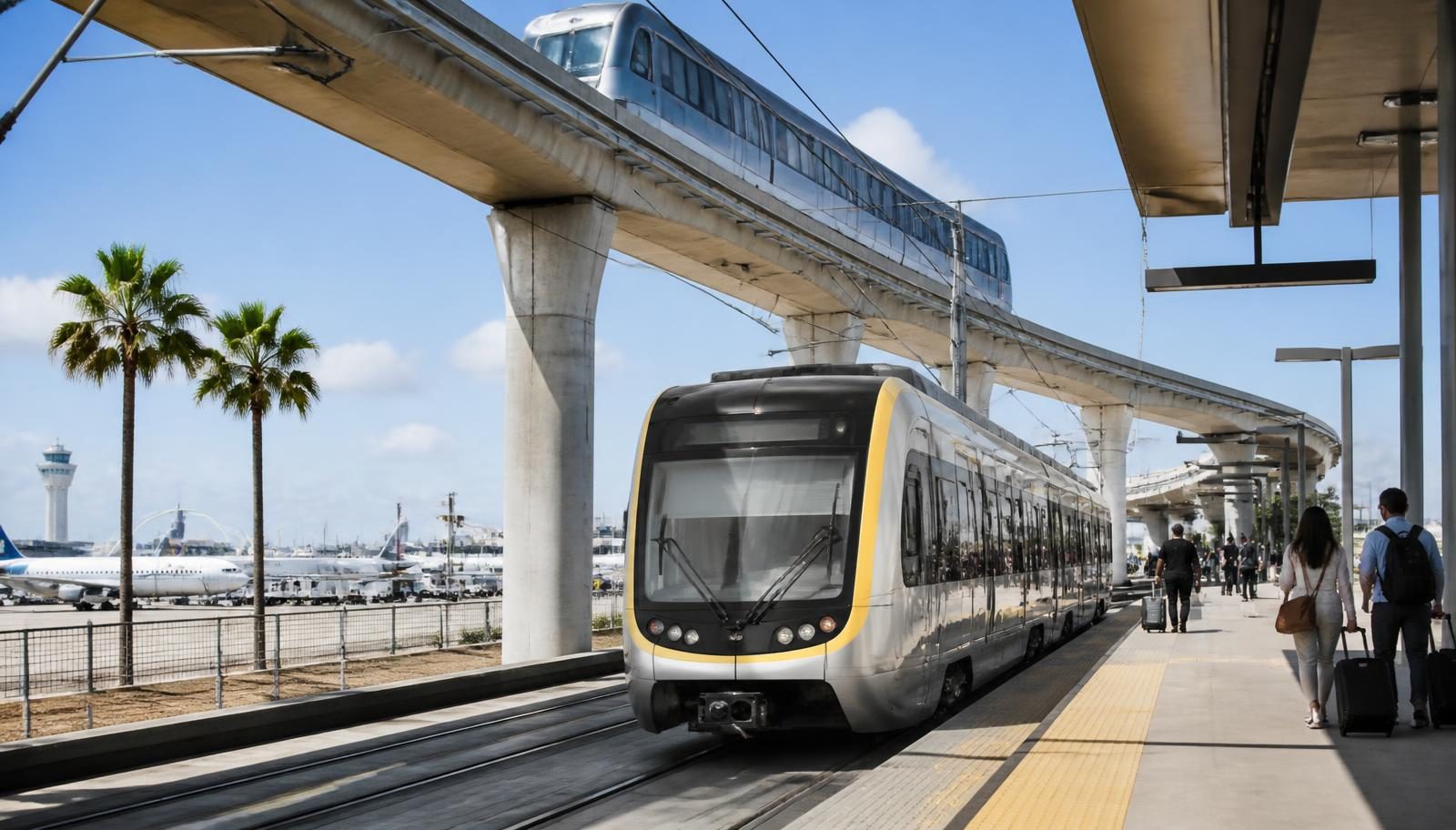
Visitors are often surprised that Los Angeles has a growing rail network. It is genuinely useful along certain corridors — and genuinely limited across others, which is why most business travelers end up combining rail with a car.
This guide covers the lines, the stations that matter for travelers, the airport and stadium connections, and the honest list of trips where a chauffeured vehicle is still faster and less stressful.
The rail lines at a glance
Metro rail is organized by lettered lines that radiate from Downtown Los Angeles, mixing light rail and subway.
- B Line (subway): Downtown to Hollywood and North Hollywood — the Valley connection.
- D Line (subway): Downtown toward Koreatown and the Miracle Mile, extending west.
- A Line: Long Beach through Downtown and up to Pasadena — the longest run in the system.
- E Line: Santa Monica to Downtown, through Culver City and Exposition Park.
- K Line: Crenshaw and Inglewood to the South Bay, with the LAX connection.
- C Line: Norwalk to the South Bay along the 105 corridor.
Stations worth knowing
A handful of stations cover most visitor needs: Union Station for regional rail and Amtrak, 7th Street/Metro Center as the Downtown transfer hub, Hollywood/Highland for the Walk of Fame and the theatres, Downtown Santa Monica at the end of the E Line, Expo/Vermont and LATTC for Exposition Park venues, and Downtown Long Beach for the waterfront and convention center.
Airport and stadium connections
The LAX/Metro Transit Center and the automated people mover link the K and C lines to the terminals, which makes rail viable for light travelers arriving mid-day. With checked luggage, a tight schedule or a late arrival, the transfers add up quickly.
For events, rail plus a short walk works well at Crypto.com Arena, the Peacock Theater and Exposition Park venues. SoFi Stadium and the Intuit Dome are near the K Line but still involve a shuttle or a walk, and the Rose Bowl is a bus-and-walk exercise on game days.
When a private car is still the better call
Rail is a straight-line tool. Los Angeles business days rarely run in straight lines.
- Early-morning or late-night airport transfers, when frequency drops.
- Any day with luggage, equipment or garment bags.
- Multi-stop itineraries across the Westside, Downtown and the Valley.
- Client entertainment, where arrival matters as much as timing.
- Beach cities, canyon addresses, studios and private aviation terminals, which rail does not reach.
The practical combination
Many of our regular clients use both: rail for a predictable Downtown-to-Hollywood hop, and a chauffeur for airport runs, evening movements and anything with a schedule attached to it.
If you tell us your itinerary, we will tell you honestly which legs are better on the train — and cover the rest.
Keep reading
Passenger Safety
Before You Book a Limo in Los Angeles: How to Check If a Company Is Licensed and Insured
Travel Resources
Los Angeles Traffic, Emergency Numbers & Useful Resources: A Traveler's Guide
Los Angeles Guide
Los Angeles After Dark: A Chauffeur's Guide to Nightlife, Dining & Getting Around
Los Angeles Guide
The Best Beaches in Los Angeles: A Local Transportation Guide
Chauffeur Standards
What Is a Black Tie Chauffeur Service? The Exodus Limo Service Standard
Traveler Guides
Questions to Ask Before Booking a Chauffeur in Los Angeles: A Passenger's Checklist
Airport Guides
LAX Pickup Guide: Curbside Columns, Letters and Numbers Explained
Travel Planning
Best Times to Fly Out of LAX, Burbank, John Wayne and Long Beach
Los Angeles
Los Angeles Freeway Rush Hour: When Each Corridor Actually Moves
Events
LA28 Olympic Games: How to Move Around Los Angeles in Summer 2028
Los Angeles Guide
Los Angeles Is an Events City: Getting Around Concerts, Conventions and Big Dates
Los Angeles Guide
The Best Places to Visit in Los Angeles: Museums, Zoo, Aquarium and Piers
Reserve your chauffeur
Confirmed reservations, transparent pricing and 24/7 dispatch.